
What to Check Before Choosing an Online Quran Teacher for Your Family
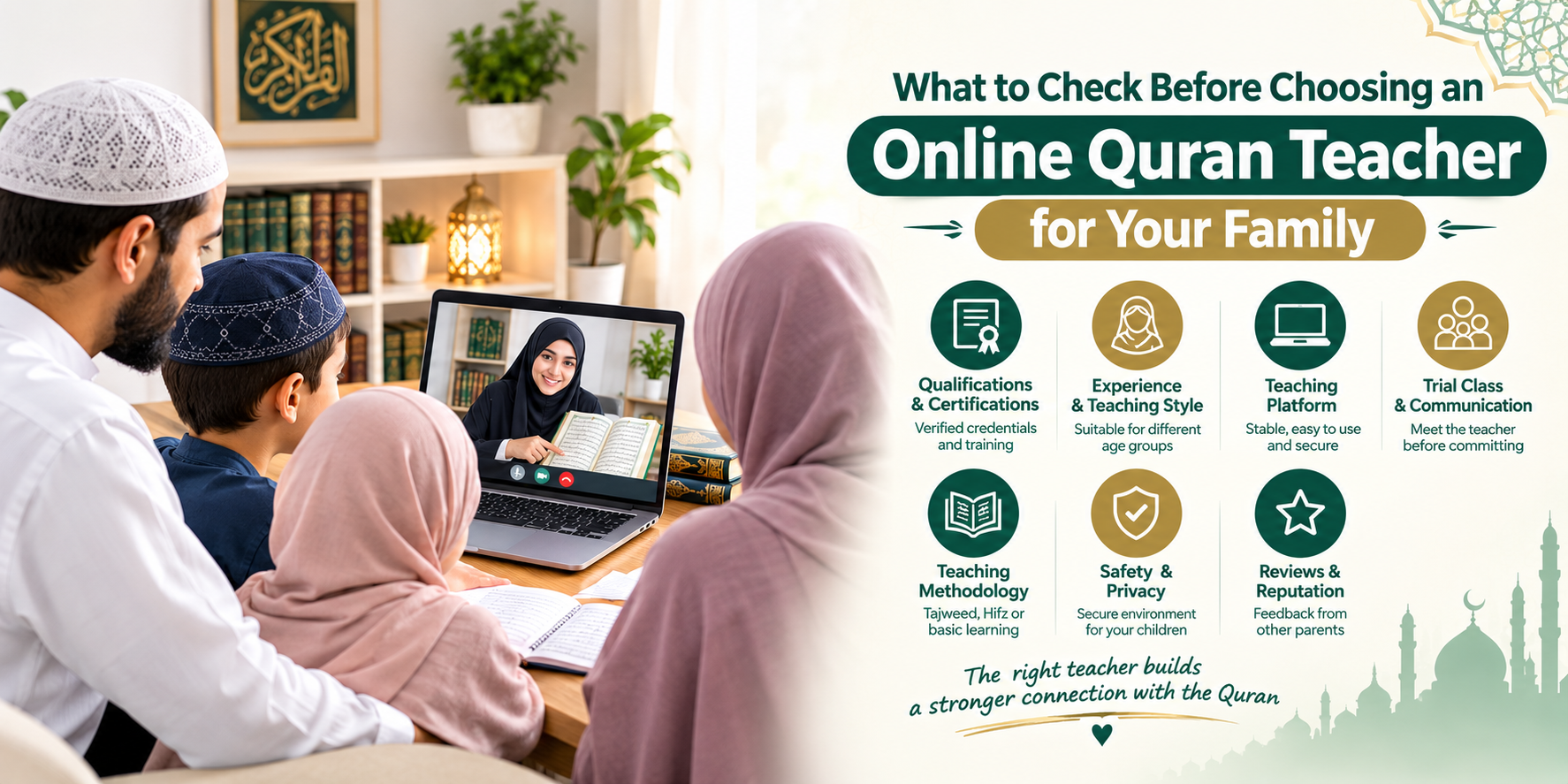
Finding the right Online Quran Teacher for Your Family can be challenging when searching online, as dozens of platforms promise the same things: qualified teachers, flexible timing, and a free trial. For a family trying to decide where to actually enroll, that sameness makes the decision harder, not easier. The real differences only show up once you know what questions to ask and once you’re clear on what your family actually needs from a teacher.
This guide walks through the practical checks worth doing before you commit, whatever platform you’re considering.
Start With What Actually Matters to Your Family
Before comparing platforms, it helps to be honest about your own priorities. Some families need a teacher who speaks Urdu alongside English. Some need a female teacher specifically, for a daughter, a sister, or a mother who isn’t comfortable on video calls with a male tutor. Others are looking for structured memorization support, not just general reading practice.
One priority that’s easy to overlook, but shouldn’t be, is whether the platform’s teaching approach and fiqh actually match your family’s own. Not every Quran academy teaches the same way. Some follow a Sunni curriculum, others are built specifically around Shia teachings and Fiqh Jafria, with lessons that include the love of Ahlul Bayt (AS) as part of the everyday learning experience, not an afterthought. This distinction matters more than it might seem, especially for children, who absorb far more from how something is taught than just the Arabic itself.
Why 1-on-1, Live Classes Beat Everything Else
Regardless of which platform or approach you choose, the format of the class matters enormously. Pre-recorded lessons can’t correct a child’s pronunciation in real time. Group classes mean the teacher’s attention is split, and a shy child may never speak up at all during a session shared with other students.
A private, live, 1-on-1 class solves both problems. The teacher hears every word the student recites and corrects mistakes immediately, before they turn into habits that are much harder to unlearn later. This is true whether the student is a four-year-old starting with basic Arabic letters or an adult finally getting around to learning Tajweed properly.
Questions Worth Asking Before You Enroll Anywhere
A short list of questions will usually tell you everything you need to know about a platform, long before you commit any money:
- Is the class genuinely 1-on-1, with the same teacher every session, or does the platform rotate tutors?
- Does the curriculum match your family’s own beliefs and approach, whether that’s Fiqh Jafria and Ahlul Bayt-centered teaching, or a different school of thought? Ask directly if it isn’t clear from the website.
- Is a female teacher available, if that’s a requirement for your daughter, sister, or yourself?
- Is there a free trial class, with no payment required, so you can judge the teaching style before committing to a monthly plan?
- Is there a weekly or monthly progress report, so parents can actually track improvement instead of just hoping it’s happening?
Platforms vary quite a bit on these points. As one example among many, Hidayah Quran Academy offers private 1-on-1 classes with a female teacher and a free 30-minute trial, and is worth knowing about specifically because it teaches a traditional Ahl-e-Sunnah curriculum. That’s useful context if you’re comparing options and want a curriculum that specifically aligns with Shia teachings and Fiqh Jafria instead, since not every “female Quran teacher” search result will be built around the same approach.
Don’t Skip the Trial Class, Whoever You Choose
Whichever platform ends up fitting your family, the free trial class is the step that actually matters most. A polished website tells you very little about how a teacher handles a shy child, a repeated mistake, or a student who’s embarrassed about starting from zero as an adult. Only sitting through an actual session shows you that.
During the trial, pay attention to a few things: does the teacher explain corrections patiently, or just repeat the right pronunciation and move on? Does the student seem more relaxed by the end of the session than at the start? Does the teacher’s teaching page, or any platform’s equivalent, match what you actually experienced in the trial, or does it oversell things a little?
That one session, more than any comparison article, is what should guide the final decision.
Frequently Asked Questions
Is it necessary to find a teacher who follows the same fiqh as my family? It’s not strictly necessary for basic Arabic reading, but for Tajweed, Tafseer, and especially for how Islamic values are framed during lessons, many families find it matters a great deal, particularly for young children who absorb the framing alongside the content.
How do I know if a platform’s classes are actually 1-on-1?
Ask directly before enrolling, and confirm during the free trial that the same teacher stays with the same student across sessions rather than rotating.
Is a free trial class really free, with no obligation?
On legitimate platforms, yes. You should never need to enter payment details or commit to a plan just to sit through a trial session.
What age should a child start online Quran classes?
Most reputable academies accept children from around age three to four, using short, simple sessions built around pictures, repetition, and patience rather than long lectures.
Can adults with no prior reading experience join without feeling embarrassed?
Yes, on any well-run platform. A good teacher treats an adult beginner exactly the same as a child beginner: with patience and no judgment, since the whole point of starting is that the student doesn’t already know it.
How long does it typically take to see improvement?
Basic reading fluency often shows visible progress within a few months of consistent, live 1-on-1 classes. Tajweed accuracy and memorization take longer and depend heavily on how consistently the student practices between sessions. For students looking for structured Islamic education alongside Quran learning, Shia Seminary can also be explored as a relevant resource.